
How to choose a bank
Choosing who to trust with your money is a big decision. The world of banking can seem like a whirlwind of jargon and fine print, so it’s perfectly normal if you're feeling a little lost.
It’s your money and you need to feel comfortable that it’s in safe hands. But with so many options out there, how do you decide which is the best bank for you? Thinking about what you need is a good place to start.
Initial considerations
What are your must-haves?
Let’s start at the very beginning: what exactly do you need? Before going any further, you'll want to consider what services are non-negotiables for you. Maybe you like the personal touch of speaking with a teller in person or prefer the convenience of digital banking or neobanks? If you plan on traveling then low-cost international withdrawals might be a priority for you. Mobile banking, investment options, savings accounts, loans and credit cards are just a few of the features that might be on your must-have list. Identify your essentials based on your own circumstances and rule out any that don’t meet your needs.
What do you want to achieve?
Saving for your dream home, planning a big trip or thinking about future retirement options? Whatever your financial goals, it’s worth looking for banks that offer products and services to help you reach them like savings accounts or investment services.
How much will you pay in and take out?
If you plan to deposit and withdraw money regularly then banks with high ATM withdrawal limits, easy access to branches and online services like in-app check payments might be things you want to prioritize.
What to look for when choosing a bank?
Now you know what you need, you're ready to start your search. If you find that more than one bank meets your requirements here are some questions to ask to help you narrow down your options:
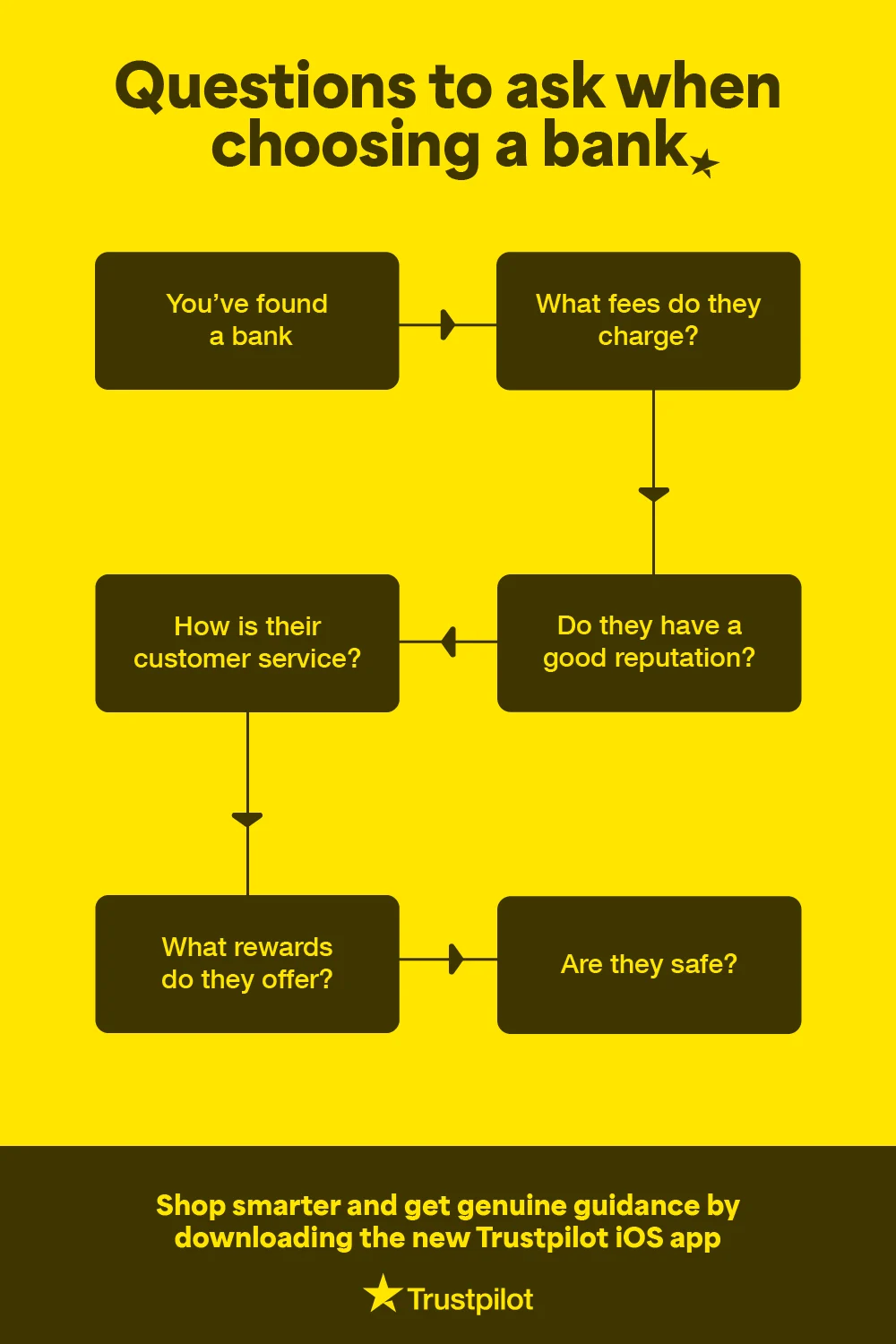
What fees do they charge?
Banks might have different charges for overdrafts, ATM withdrawals and other services like wire transfer fees and safety deposit box fees. You probably don’t want to pay for services you won’t use so be sure to read the fine print so you know what you’re paying for.
Are they safe?
Knowing that your money and your personal information are safe is high up the list of priorities. Safety measures to consider during your search include deposit insurance, fraud detection and protection, and secure online banking measures like two-factor authentication and encryption.
Do they have a good reputation?
Do some research on the bank’s reputation and history. Reviews can be a big help at this stage, with real people sharing their authentic experiences. Here’s an overview of bank reviews on Trustpilot to help you get started:
Some of the negative issues people mention in bank reviews on Trustpilot include:
Poor customer service: Some customers mention slow, unresponsive, or unhelpful customer service representatives, as well as long wait times on hold.
Hidden fees and charges: Customers can feel misled or frustrated when banks charge unexpected or hidden fees, such as ATM fees, overdraft fees, or maintenance fees.
Technical glitches and errors: Some customers report experiencing technical problems with online banking platforms or mobile apps, for example difficulty logging in, slow processing times, or error messages.
Fraudulent activity: Customers may criticize banks for not doing enough to prevent or resolve issues like unauthorized transactions or identity theft.
But it’s definitely not all negativity, here are some of the positives Trustpilot reviews highlight:
Excellent customer service: Customers often praise banks that offer prompt and helpful customer service, with attentive representatives who are willing to listen and offer practical solutions to their concerns.
User-friendly digital banking platforms: Many customers appreciate banks that offer easy-to-use mobile apps and online banking platforms that are reliable and convenient.
Competitive interest rates: Customers often look for banks that offer competitive interest rates on savings and checking accounts, and they appreciate it when banks provide transparent information on rates and fees.
Fast and secure transactions: Customers expect banks to process transactions quickly and securely, and they appreciate it when banks provide reliable and user-friendly payment systems.
Rewards and perks: Some customers are attracted to banks that offer rewards and perks for opening accounts, making deposits, or using certain features.
But this is just a snapshot of what you can learn from customers. You’ll find more information from bank reviews here.
How convenient is it?
If user-friendly online features are important to you check out the features and services of the bank’s app and website. If in-person banking is top of your list then you should check that there are easily accessible local branches you can visit.
How is their customer service?
It's always reassuring to know that your bank has a helpful and responsive customer service team who will be there to support you if you need help. Customers often share their experience of customer service in their reviews so be sure to take a look.
What rewards do they offer?
It's worth researching if there are any features that could benefit you. Some banks might offer opening bonuses or other benefits like cashback on purchases that could make their offering more appealing.
And there you have it, after figuring out what you need and refining your options based on your priorities, you should be on your way to choosing the best bank for your needs. Don't forget to check Trustpilot reviews to learn more from the experiences of customers.
And when you're ready to take the next step, check out our guide to opening a bank account.
Trustpilot is a review platform that is open to all. The companies and profile pages referenced in this article are provided for informational purposes only and are not recommended, endorsed by, or representative of the views of Trustpilot. The Trustpilot companies linked in this post are expected to abide by Trustpilot’s Guidelines, but have not been reviewed for compliance.