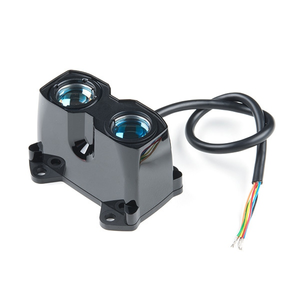
LIDAR-Lite v3HP

LIDAR-Lite v3HP Reviews

A product’s star rating is calculated as the average of all its reviews.


SparkFun Electronics logo

Sold by SparkFun Electronics

www.sparkfun.com

945 Reviews

4.5

The information on this page is based solely on product reviews written by customers of SparkFun Electronics via Trustpilot.


Product details

Brand: Garmin

The LIDAR-Lite v3HP is a compact, high-performance optical distance measurement LIDAR sensor from Garmin™. It represents the next generation of optical ranging, building on the popular LIDAR-Lite v3 by enhancing performance, improving power efficiency, and incorporating a rugged, IPX7-rated housing. It is the ideal, cost-effective ranging solution for drones, robots, and unmanned vehicles (UAV/UGV) applications. A Faster and More Efficient Lidar Sensor The "HP" in v3HP stands for High Performance, and it delivers two critical upgrades over the previous v3 model: Higher-Speed Sampling: The v3HP can sample at rates exceeding 1kHz. This represents a significant improvement over v3's 500Hz maximum rate, enabling faster measurements and smoother tracking of fast-moving objects. Improved Power Efficiency: This model is substantially more power-efficient, consuming 40mA less current than its predecessor. Idle: 65mA (v3HP) vs. 105mA (v3) Acquiring: 85mA (v3HP) vs. 130mA (v3) Core Performance and Interface The LIDAR-Lite v3HP features a ranging capability of 1 meter to 40 meters with an accuracy of ±2.5cm (at distances greater than 2m). It operates at 5VDC (6V max) and utilizes an edge-emitting, 905nm (1.3W) single-stripe laser transmitter. Like the v3, the v3HP remains highly user-configurable, allowing you to fine-tune the balance between accuracy, operating range, and measurement time to fit your specific application. It provides two standard communication interfaces, I2C and PWM, which are accessible via the attached 200mm cable.

All reviews


Rated 2 out of 5 stars

Lidar-Lite v.3HP is working, but...Main problems: 1/ poor documentation (unclear description of the register and data) 2/ no support. Everything is searched for in discussion forums on the internet or tried by experiments. 3/ The accuracy and speed of measurement fall short of the promised figures