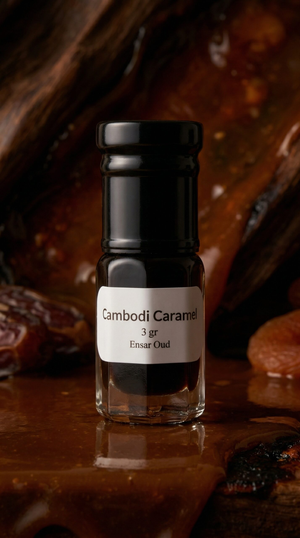
People used to complain to me in person and in public about my reluctance to launch a ‘Cambodi’. Throughout that time, I had maintained that the so-called Cambodi oils marketed by the oud conglomerates told the story of how the name ‘Cambodi’ had come to be associated with poor, low-grade oud oils. Sad but true. Due to increasingly cheaper methods of production, the distinctly rich, inviting sweetness unique to Cambodian oils had been all but watered down to death. This became the norm, with almost no exception. Time and again, we heard stories of Saudi dealers approaching Cambodian artisans, demanding significantly cheaper oils. This resulted in mixed, synthetic, poor-quality ‘Cambodis’. I personally met the heads of two of the largest oud corporations in the Gulf. I saw the facilities where these enterprises operated and witnessed the blending, cutting, and watering down that took place in the production of so-called ‘Oudh Cambodi’. These men openly confessed that their Cambodi Moattaqs, Ateeqs, Kadims, Koh Kongs, and Prachin Burys were all mixtures, blends, and various olfactory concoctions – not pure single-extraction Cambodian agarwood oils. Another way of acquiring so-called Cambodi oud was through the internet, which is what ‘competitors’ did – and what anyone could just as easily do themselves. Suppliers from the Far East, including Cambodia, were eager to send samples, hoping to secure business. Over the years, we received countless samples from different players in the Cambodi oud market, and our reluctance to put the Oriscent label on them should have made our stance abundantly clear. These samples, even those from sources closer to home, were actually poorer, more synthetic, and more counterfeit than what the Khaliji houses had on offer. It wasn’t until early that spring that I finally said enough is enough and took it upon myself to travel to Cambodia. My expectations were low. But things got off to a promising start. As we stepped into Phnom Penh, we were greeted by its sticky humidity – a welcome embrace, because we knew this was the kind of weather that produces oud oil. Lo and behold, there was reason to rejoice. But it wasn’t a smooth journey. We sifted through jar after jar of vetiver, DOP, and even pig fat-laced oud oil as we moved through both Phnom Penh and Koh Kong. The majority of oils we were presented with were thoroughly sampled, only to discover they were adulterated or entirely synthetic. Still, we were determined to return with no less than what we had set out to find. At long last, after days of disappointment, we walked into the backyard distillery of two remarkable artisans, and that deep syrupy wallow instantly made our mouths water. We knew we had found it – that hallmark Cambodi sweetness. You wanted a Cambodi. Behold: the oil was rich, it was delicious; it was Cambodi Caramel. The excitement and anticipation surrounding that trip to Cambodia led to most of our stock selling out even before it hit the website. Everyone who tried this oil invariably ordered it. We received messages from customers saying it was the finest Cambodi oud they had ever experienced. Unlike the typically linear Cambodi scent, Caramel’s intense flavor played with the senses from start to finish. Unmatched in its fruity sweetness by any other Cambodi on the market, Cambodi Caramel fulfilled oud cravings in ways nothing else could. Today, we bring you its reincarnation: distilled to an even higher standard, and offered at a price lower than it was 15 years ago. Yes, lower. In oud years, 15 is a lifetime. Back then, the China market was just a whisper, and our Organic Oud mission was in its infancy. The landscape was unrecognizable – so it’s no wonder a profile like CC’s hasn’t surfaced since. But this is it. The closest we’ve come to that original Cambodi. And there’s a reason it took us years before we felt ready to place our name on a Cambodian oud in the first place… Featured Testimonials...